Skip to content
ScienceBlog.com
  • Topics
    • Brain & Behavior
    • Earth, Energy & Environment
    • Health
    • Technology
    • Life & Non-humans
    • Physics & Mathematics
    • Space
  • Our Bloggers
  • Our Substack
  • Follow Us!
    • Bluesky
    • Threads
    • FaceBook
    • Google News
    • Twitter/X
  • Contribute/Contact

physics

Passive Rydberg-atomic transducer

Physicists create new form of antenna for radio waves

Categories Physics & Mathematics, Space, Technology
Microscopic image

Superlensing without a super lens: physicists boost microscopes beyond limits

Categories Physics & Mathematics, Technology
While errors are normally hard to spot in quantum devices, researchers have shown that, with careful control, some errors can cause atoms to glow. Researchers used this capability to execute a quantum simulation using an array of atoms and a laser beam, as shown in this artist's concept. The experiment showed that they could discard the glowing, erroneous atoms and make the quantum simulation run more efficiently.

A new way to erase quantum computer errors

Categories Physics & Mathematics, Technology
Plot thickens in hunt for ninth planet

Plot thickens in hunt for ninth planet

Categories Space
Ohio State logo

Ohio State’s Agostini wins Nobel Prize in Physics

Categories Technology
An artist's conceptual rendering of antihydrogen atoms falling out the bottom of the magnetic trap of the ALPHA-g apparatus. As the antihydrogen atoms escape, they touch the chamber walls and annihilate. Most of the annihilations occur beneath the chamber, showing that gravity is pulling the antihydrogen down. The rotating magnetic field lines in the animation represent the invisible influence of the magnetic field on the antihydrogen. The magnetic field does not rotate in the actual experiment.

Down goes antimatter! Gravity’s effect on matter’s elusive twin is revealed

Categories Physics & Mathematics
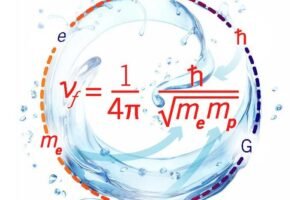
The image shows how fundamental constants of nature set the fundamental lower limit for liquid viscosity.

How a cup of water can unlock the secrets of our Universe

Categories Physics & Mathematics
Researchers have discovered Pines' demon, a collection of electrons in a metal that behaves like a massless wave.

Demon Hunting: Physicists confirm 67-year-old prediction of massless, neutral composite particle

Categories Physics & Mathematics
Ohio State logo

Using supernovae to study neutrinos’ strange properties

Categories Technology
Despite doubts from quantum physicists: Einstein's theory of relativity reaffirmed

Despite doubts from quantum physicists, Einstein’s theory of relativity reaffirmed

Categories Physics & Mathematics, Space

How the humble neutron can help solve some of the universe’s deepest mysteries

Categories Bloggers
A snapshot of a lattice of frustrated nanomagnets.

Nanomagnetic strings that wiggle and hook up

Categories Physics & Mathematics
A University of Chicago study found links at the atomic level between photosynthesis and exciton condensates—a strange state of physics that allows energy to flow frictionlessly through a material. The finding is scientifically intriguing and may suggest new ways to think about designing electronics, the authors said.

Scientists find link between photosynthesis and ‘fifth state of matter’

Categories Earth, Energy & Environment, Life & Non-humans, Physics & Mathematics
Older posts
Newer posts
← Previous Page1 … Page3 Page4 Page5 Next →

Bloggers

  • Cities of tomorrow: young Poles share vision for smarter, greener living
  • On the City of Fresno’s laudable waste-handling programs
  • Serving California’s PG&E, world’s first ultra-long duration hybrid green hydrogen energy storage microgrid moves forward
  • Truing the Sun
  • Hidden hunger in Europe: well fed yet undernourished
  • Where curiosity meets innovation: EU science fair in Belgium dazzles young minds
  • Spiralling weather and climate impacts documented in WMO report
Substack subscription form sign up

© 2026 ScienceBlog.com | Follow our RSS / XML feed