Skip to content
ScienceBlog.com
  • Topics
    • Brain & Behavior
    • Earth, Energy & Environment
    • Health
    • Technology
    • Life & Non-humans
    • Physics & Mathematics
    • Space
  • Our Bloggers
  • Our Substack
  • Follow Us!
    • Bluesky
    • Threads
    • FaceBook
    • Google News
    • Twitter/X
  • Contribute/Contact

Evolution

On the left is a parent of the early mammal Dryolestes which raises a brood after reaching sexual maturity at age four. On the right is a Haldanodon, a member of the family of mammal-like docodonts, before fully reaching the mammalian evolutionary level; the creature's lifespan was eleven to fourteen years.

Early mammals lived longer

Categories Life & Non-humans

Funeral by Funeral

Categories Bloggers
The pterosaur likely used all four limbs to propel itself in the air, as seen in bats today, researchers have found.

Giant prehistoric flying reptile took off using similar method to bats, study finds

Categories Life & Non-humans
Aggie alumna Kim Conley (center) competed in the 5,000 and 10,000 meter events at the 2012 and 2016 Olympic Games. New research supports the idea that humans have long used endurance running as a way to chase down prey. (Photo by Brian Davies/The Register-Guard, Eugene, Oregon)

Endurance Running a Key Factor in Human Evolution

Categories Health
Bacterial cellulose in the wet state.

How researchers turn bacteria into cellulose-producing mini-factories

Categories Life & Non-humans, Technology
One of just two vertebrates without a jaw, sea lampreys that are wreaking havoc in Midwestern fisheries are simultaneously helping scientists understand the origins of two important stem cells.

Jawless Lampreys Reveal Ancient Secrets of Vertebrate Evolution

Categories Life & Non-humans
Peacock butterfly

Butterflies accumulate enough static electricity to attract pollen without contact

Categories Life & Non-humans, Physics & Mathematics
Komodo tooth iron map. Credit: Dr Aaron LeBlanc

Komodo dragons have iron-coated teeth to rip apart their prey

Categories Life & Non-humans
A scientist defeathers one of the birds. Image by Dr Mariana Nabais.

Cook like a Neanderthal: Scientists try to replicate ancient butchering methods to learn how Neanderthals ate birds

Categories Social Sciences
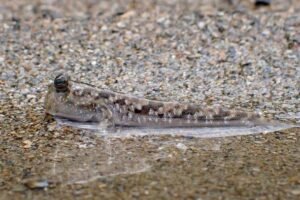
mudskipper

To walk, you just need fins and a sense of adventure

Categories Life & Non-humans
Ohio State logo

Using AI to scrutinize, validate theories on animal evolution

Categories Technology

Inverting the Hard Problem, part two

Categories Bloggers
Abstract illustration to accompany brain size article

Human Brain Size Defies Evolutionary Trend

Categories Brain & Behavior
Older posts
Newer posts
← Previous Page1 Page2 Page3 Page4 … Page11 Next →

Bloggers

  • Cities of tomorrow: young Poles share vision for smarter, greener living
  • On the City of Fresno’s laudable waste-handling programs
  • Serving California’s PG&E, world’s first ultra-long duration hybrid green hydrogen energy storage microgrid moves forward
  • Truing the Sun
  • Hidden hunger in Europe: well fed yet undernourished
  • Where curiosity meets innovation: EU science fair in Belgium dazzles young minds
  • Spiralling weather and climate impacts documented in WMO report
Substack subscription form sign up

© 2026 ScienceBlog.com | Follow our RSS / XML feed