Skip to content
ScienceBlog.com
  • Topics
    • Brain & Behavior
    • Earth, Energy & Environment
    • Health
    • Technology
    • Life & Non-humans
    • Physics & Mathematics
    • Space
  • Our Bloggers
  • Our Substack
  • Follow Us!
    • Bluesky
    • Threads
    • FaceBook
    • Google News
    • Twitter/X
  • Contribute/Contact

conservation

Crested Moa. Pachyornis australis. From the series ExSnct Birds of New Zealand., 2005, Masterton, by Paul MarSnson. Te Papa (2006-0010-1-19).

New Zealand’s flightless birds are retreating to moa refuges

Categories Life & Non-humans
A 7-meter basking shark feeding near the surface after it was tagged by researchers.

Researchers record first-ever images and data of a shark experiencing a boat strike

Categories Life & Non-humans
urban seagull

Urban seagulls still prefer seafood

Categories Life & Non-humans
Tree in Mozambique

African Woodlands Hold Double the Carbon Previously Thought

Categories Earth, Energy & Environment
infographic on biodiversity

Saving Earth’s Biodiversity: Scientists Pinpoint Crucial 1.22% of Land to Protect

Categories Earth, Energy & Environment, Life & Non-humans
Heath goannas

Giant Lizards Could Save Australian Sheep Farms Millions, Study Reveals

Categories Life & Non-humans
This schematic shows the difference in length between a PCFG gray whale born in 2020 vs one born prior to the year 2000. OSU researchers determined that a full-grown PCFG gray whale born in 2020 is expected to reach an adult body length that is 1.65 meters (about 5 feet, 5 inches) shorter than a gray whale born prior to 2000. For PCFG gray whales that grow to be 38-41 feet long at full maturity, that accounts for a loss of more than 13% of their total length.

Pacific coast gray whales have gotten 13% shorter in the past 20-30 years

Categories Life & Non-humans
An elephant family comforts their calf during an afternoon nap under a tree in Samburu National Reserve, Kenya. Credit: George Wittemyer

Elephants Address Each Other by Name, Study Finds

Categories Life & Non-humans
Thismia malayana live specimen.

Remarkable new plant species steals nutrients from underground fungi

Categories Life & Non-humans
fish in the ocean

New Model Reveals Most Marine Protected Areas Fail to Safeguard Rare Migratory Fish

Categories Earth, Energy & Environment, Life & Non-humans
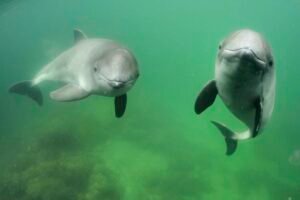
Harbor porpoises need to eat 2000 fish a day to meet their energy needs. Not because it's demanding to swim, dive and hunt as they are streamlined and very energy efficient. They simply need vast amounts of energy to keep warm in the cold water.

Noisy Motorboats Disrupt Hunting and Threaten Survival of Denmark’s Harbor Porpoises

Categories Uncategorized
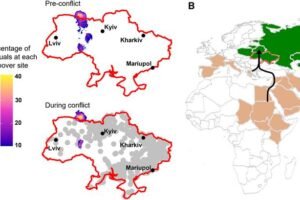
Distribution, migration, and stopover use in Ukraine for Greater Spotted Eagles

Migrating Eagles Forced to Dodge Conflict in Ukraine, Study Finds

Categories Life & Non-humans, Social Sciences
A southern sea otter preys on a marine animal.

Otters, especially females, use tools to survive a changing world

Categories Life & Non-humans
Older posts
Newer posts
← Previous Page1 Page2 Page3 Page4 … Page9 Next →

Bloggers

  • Cities of tomorrow: young Poles share vision for smarter, greener living
  • On the City of Fresno’s laudable waste-handling programs
  • Serving California’s PG&E, world’s first ultra-long duration hybrid green hydrogen energy storage microgrid moves forward
  • Truing the Sun
  • Hidden hunger in Europe: well fed yet undernourished
  • Where curiosity meets innovation: EU science fair in Belgium dazzles young minds
  • Spiralling weather and climate impacts documented in WMO report
Substack subscription form sign up

© 2026 ScienceBlog.com | Follow our RSS / XML feed