Skip to content
ScienceBlog.com
  • Topics
    • Brain & Behavior
    • Earth, Energy & Environment
    • Health
    • Technology
    • Life & Non-humans
    • Physics & Mathematics
    • Space
  • Our Bloggers
  • Our Substack
  • Follow Us!
    • Bluesky
    • Threads
    • FaceBook
    • Google News
    • Twitter/X
  • Contribute/Contact

UC San Diego

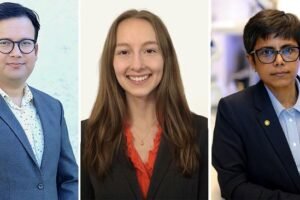
Members of the UC San Diego component of the international team that discovered (and named) MIP-C are (from left) Saptarshi Sinha, Ella McLaren and Pradipta Ghosh. MIP-C is a previously unknown post-COVID syndrome that results in lung scarring, sometimes progressing to death.

MIP-C: An entiurely new Covid-related syndrome

Categories Health
hiv virus superimposed over a border crossing where the gates are shut

Closing the U.S.-Mexico Border During the Pandemic Increased HIV Transmission, Study Finds

Categories Health, Social Sciences
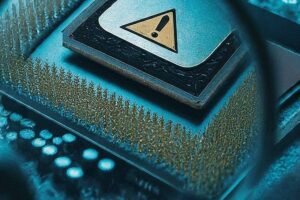
A generated image showing a computer processor with a magnifying glass revealing the Path History Register and branch predictor, along with a warning sign indicating a security vulnerability

Researchers Uncover New High-Precision Attacks Targeting Billions of Intel and AMD Processors

Categories Social Sciences, Technology
The updated bird family tree, published in Nature, delineating 93 million years of evolutionary relationships between 363 bird species.

Computational tools fuel reconstruction of new and improved bird family tree

Categories Life & Non-humans
The math problem that took nearly a century to solve

The math problem that took nearly a century to solve

Categories Physics & Mathematics
Particle counts of petroleum-based (EVA) and plant-based (TPU-FC1) microplastics show that, over time, EVAs exhibit virtually no biodegradation, while the TPUs have mostly disappeared by day 200.

Plant-Based Plastics Biodegrade in Months, Not Centuries

Categories Earth, Energy & Environment, Health, Technology
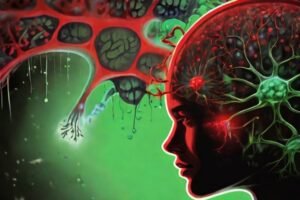
A_person_cowering_in_fear_with_a_thought_bubble_showin_0

How stress turns into fear in the brain

Categories Brain & Behavior
Bacteria in the gut convert bile acids produced by the liver into a wide array of new compounds. These molecules are akin to the language of the gut microbiome, allowing them to influence distant organ systems. Photo Credit: Lakshmiraman Oza/Pixabay

Thousands of New Molecules Discovered in the Language of the Gut

Categories Health
Athlete holding a weight plate

Self-Control: The Surprising Path to Power

Categories Brain & Behavior, Social Sciences
Women playing pickelball

As Pickleball’s Popularity Surges, Injuries Are Also on the Rise

Categories Health
E coli

New Technology Unscrambles the Chatter of Microbes

Categories Health
mitichondria

How obesity dismantles our mitochondria

Categories Health
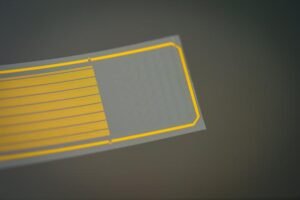
Closeup of the graphene electrode array.

Transparent brain implant can read deep neural activity from the surface

Categories Brain & Behavior, Technology
Older posts
Newer posts
← Previous Page1 Page2 Page3 Page4 … Page25 Next →

Bloggers

  • Cities of tomorrow: young Poles share vision for smarter, greener living
  • On the City of Fresno’s laudable waste-handling programs
  • Serving California’s PG&E, world’s first ultra-long duration hybrid green hydrogen energy storage microgrid moves forward
  • Truing the Sun
  • Hidden hunger in Europe: well fed yet undernourished
  • Where curiosity meets innovation: EU science fair in Belgium dazzles young minds
  • Spiralling weather and climate impacts documented in WMO report
Substack subscription form sign up

© 2026 ScienceBlog.com | Follow our RSS / XML feed