Skip to content
ScienceBlog.com
  • Topics
    • Brain & Behavior
    • Earth, Energy & Environment
    • Health
    • Technology
    • Life & Non-humans
    • Physics & Mathematics
    • Space
  • Our Bloggers
  • Our Substack
  • Follow Us!
    • Bluesky
    • Threads
    • FaceBook
    • Google News
    • Twitter/X
  • Contribute/Contact

Okinawa Institute of Science and Technology Graduate University (OIST)

digital illustration of a mouse

Scientists Discover Mice Use Their Tails Like a Whip to Keep Balance

Categories Life & Non-humans, Physics & Mathematics
Animal behavioral model header image OIST

Innovative Model Simulates Animal Behavior with Unprecedented Accuracy

Categories Life & Non-humans, Physics & Mathematics
Visitors are often surprised and amused by the results of the Cybernetic Humanity Studio’s facial morphing technology.

Face-Morphing Study Challenges Core Ideas About Self-Recognition

Categories Uncategorized
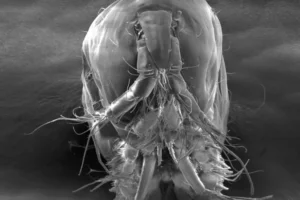
Electron microscope image showing the frontal view of a female Ikanecator primus.

Eco-friendly treatment saves squid eggs from newfound parasite

Categories Life & Non-humans
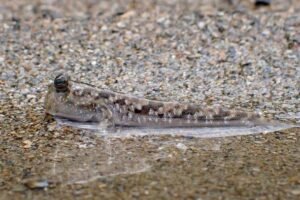
mudskipper

To walk, you just need fins and a sense of adventure

Categories Life & Non-humans
The Mixed Reality Interaction Matrix for in-person hugs.

Do digital hugs work?

Categories Brain & Behavior, Social Sciences, Technology
The common cuttlefish, Sepia officinalis.

Cuttlefish camouflage even wilder than previously thought

Categories Life & Non-humans
Left to right: Professor Hiroki Ishikawa, Miho Tamai, and Masato Hirota from the Immune Signal Unit looked for associations between genes and proteins from blood immune cells and gut bacteria, and an individual’s immune response.

Gut bacteria could be behind weaker immune responses to COVID-19 vaccine

Categories Health
In the classical Hopfield network (left), each neuron (I, j, k, l) is connected to the others in a pairwise manner. In the modified network made by Mr Burns and Professor Fukai, sets of three or more neurons can connect simultaneously.

What makes a neural network remember?

Categories Brain & Behavior, Technology
Octopuses are mollusks, a large evolutionary group to which slugs and snails also belong. Their complex brains, and those of other closely-related cephalopods, like squid and cuttlefish, have evolved separately from vertebrates, and so octopuses are often referred to as alien-like. Here, a day octopus (Octopus cyanea) poses with a Shisa, a creature from Okinawan folklore.

Scientists record first-ever brain waves from freely moving octopuses

Categories Brain & Behavior, Life & Non-humans, Technology
Pearls within a pearl oyster shell. Pearl oysters are important products in Japan, as they produce beautiful pearls that are sought after for necklaces, earrings, and rings.

Molecular fingerprint behind beautiful pearls revealed

Categories Life & Non-humans
Tob deletion induces fear and depression-like behaviors. This can be explained by the altered functional connectivity between the hippocampus and the pre-frontal cortex. The neurons in the hippocampus showed increased excitation and decreased inhibition. There were also impacts on other genes and proteins.

Jumping gene found to be strongly linked to depression, fear, and anxiety

Categories Brain & Behavior, Health
Snake and mammal venoms share common origin

Snake and mammal venoms share common origin

Categories Life & Non-humans
Older posts
Page1 Page2 Next →

Bloggers

  • Cities of tomorrow: young Poles share vision for smarter, greener living
  • On the City of Fresno’s laudable waste-handling programs
  • Serving California’s PG&E, world’s first ultra-long duration hybrid green hydrogen energy storage microgrid moves forward
  • Truing the Sun
  • Hidden hunger in Europe: well fed yet undernourished
  • Where curiosity meets innovation: EU science fair in Belgium dazzles young minds
  • Spiralling weather and climate impacts documented in WMO report
Substack subscription form sign up

© 2026 ScienceBlog.com | Follow our RSS / XML feed